








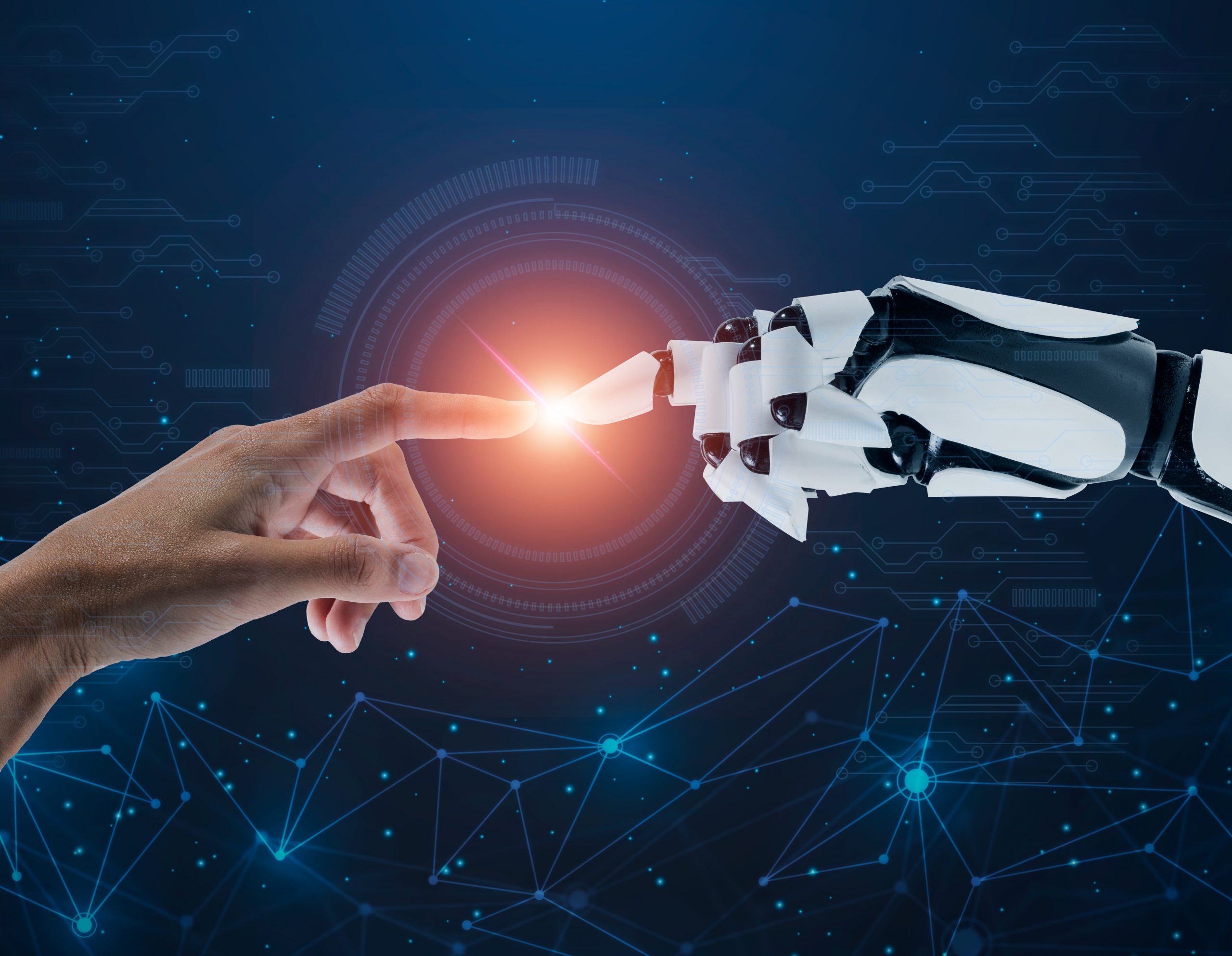
Augmented Intelligence: where humans and machines unite for a brave new world
| Topic | Insight |
|---|---|
| Core concept | Augmented intelligence combines human judgment with machine computation |
| Business value | Teams improve decision accuracy, speed, and personalization |
| Technical edge | Machine learning models detect patterns at scale |
| Human advantage | Humans provide context, ethics, and creativity |
| Risk areas | Bias, transparency gaps, and data privacy compliance |
| US relevance | Regulations and enterprise AI governance drive adoption |
The data-first reality
According to the latest estimates, 402.74 million terabytes of data are created each day.
Human analysis alone cannot process this volume.
Augmented intelligence solves this constraint by combining machine processing with human judgment.
What augmented intelligence means in practice
Augmented intelligence uses machine learning systems to support—not replace—human decisions.
Teams apply it to:
- Clinical diagnostics with AI-assisted imaging
- Financial modeling with predictive analytics
- Customer operations with real-time recommendations
This model prioritizes collaboration over automation.
Why US enterprises adopt augmented intelligence
US organizations demand measurable outcomes from AI investments.
Augmented intelligence delivers:
- Faster decision cycles
- Higher accuracy in data-heavy environments
- Improved customer personalization
Leaders focus on ROI, not experimentation.
How machines contribute to decision systems
Machines process structured and unstructured data at scale.
They:
- Detect anomalies in financial transactions
- Predict equipment failures using time-series data
- Optimize logistics using real-time inputs
Machine learning models operate with speed and consistency.
How humans maintain control and context
Humans interpret results and apply judgment.
They:
- Validate outputs against business context
- Apply ethical reasoning in edge cases
- Adjust strategies based on qualitative factors
Machines generate insights. Humans make decisions.
How augmented intelligence improves personalization
Systems analyze behavioral data to deliver targeted outputs.
Examples include:
- Product recommendations based on purchase history
- Adaptive learning paths in education platforms
- Dynamic pricing models in e-commerce
Personalization increases engagement and conversion rates.
What role virtual assistants play
Voice and conversational AI systems act as early implementations.
Tools like enterprise assistants (see AI-powered virtual assistants for workplace productivity in the USA):
- Retrieve information instantly
- Execute routine workflows
- Support employee productivity
They reduce operational friction across teams.
What risks US enterprises must address
How does bias affect augmented intelligence systems?
Bias enters through training data.
Teams must:
- Audit datasets
- Apply bias detection models
- Monitor outputs continuously
Unchecked bias leads to flawed decisions.
Why does transparency matter in AI systems?
Some models operate as black boxes.
Organizations must:
- Use explainable AI techniques
- Document decision logic
- Provide audit trails
Transparency supports compliance and trust.
How does regulation impact adoption in the US?
US enterprises must align with:
- Data privacy laws
- AI governance frameworks
- Industry-specific compliance standards
Regulation drives structured AI deployment.
How augmented intelligence changes workforce roles
AI shifts job responsibilities instead of eliminating them.
Teams now focus on:
- Model oversight
- Data validation
- Decision governance
New roles emerge in AI operations and compliance.
How to implement augmented intelligence effectively
Organizations succeed when they:
- Define clear decision boundaries between humans and machines
- Deploy smaller, efficient models for specific tasks
- Integrate AI into existing workflows instead of replacing systems
Execution matters more than theory.
The future of augmented intelligence in US enterprises
Augmented intelligence will define enterprise decision systems.
Companies that combine:
- Human expertise
- Scalable AI systems
- Strong governance will outperform competitors.
Novas Arc builds augmented intelligence systems that align with US enterprise standards.
If your team needs:
- AI-driven decision frameworks
- Scalable data pipelines
- Compliance-ready AI systems
Connect with Novas Arc to implement production-grade solutions.
